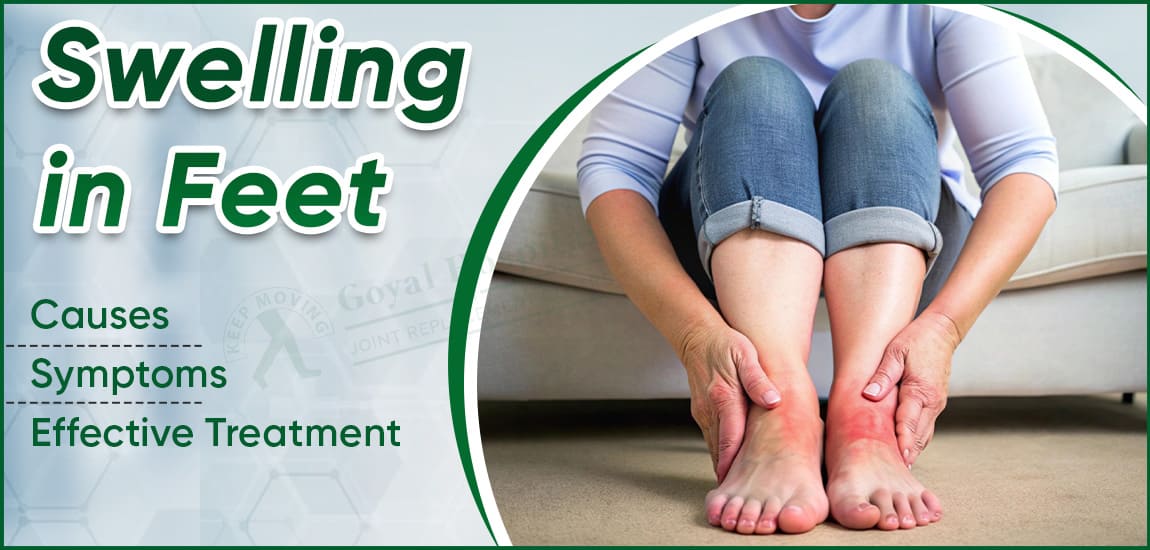
What is Swelling in Feet?
Swelling in feet or pedal edema occurs when the excess fluid gets accumulated in the feel and ankle tissues. The feet appear puffy, shiny, or stretched due to this fluid buildup. It has been observed that swelling can affect one or both foot and can be mild to severe. Get best treatment for swelling in feet at Goyal hospital where doctors focus on finding the root cause behind swelling.
The human body balances the fluid through heart, kidney, blood vessels and lymphatic system. When any of these systems dysfunctions, the fluid is likely to leak in the surrounding tissues which causes swelling. Swelling in feet is not a disease but a symptom of other issues that can be harmless or serious.
Symptoms of Swelling in Feet
Depending on the underlying cause, the swelling can occur along with other symptoms. The common foot swelling symptoms are as follows:
- Stretched skin
- Shiny skin
- Puffiness in feet
- Heaviness in legs
- Reduced flexibility in ankles/toes
- Discoloration of skin
- Shoe tightness
- Pitting edema
If you observe other symptoms along with swelling such as chest pain, redness, fever, or shortness of breath, consult our specialist right away.
You can Read Also:- What Is Ankylosing Spondylitis? Causes, Symptoms & Early Signs
Causes of Swelling in Feet
There are numerous conditions in which swelling in feet is observed, these are related to both lifestyle and medical reasons. Following are the common foot swelling causes.
A. Lifestyle-Related Causes
Did you know that simple lifestyle activities can lead to swelling in feet? Let’s read about these.
1. Prolonged Standing/Sitting
Sitting or standing for longer duration without any movement can slow down blood circulation. Further, gravity leads to fluid accumulation in the lower limbs causing swelling.
2. Excess Salt Intake
If you have been eating high level of salt then it causes the body to retain water leading to fluid accumulation in tissues.
3. Obesity
If you are obese then you are likely to have swelling in feet as excess body weight puts pressure on veins making it tough for blood to return back to the heart.
4. Pregnancy
Swelling in feet is common in pregnancy due to hormonal changes and growing uterus size which reduces the blood flow in legs, especially in the third trimester.
5. Long Travel
Long journey or flights limit the movement which causes foot or ankle swelling.
B. Medical Causes
There are many medical reasons which lead to swelling in feet, these are as follows.
1. Heart Disease
A dysfunctioning heart which is not pumping blood effectively leads to fluid accumulation in feet and legs.
2. Kidney Disease
The role of kidneys in human body is to regulate fluid balance. When they don’t function properly, the fluid is likely to accumulate in the body.
3. Liver Disease
Low protein levels in the blood caused by liver conditions leads fluid leakage in tissues causing swelling.
4. Venous Insufficiency
The damaged veins in legs leads to failure in returning blood to the heart properly which causes chronic swelling.
5. Blood Clots (Deep Vein Thrombosis)
A clot in the leg vein can lead to sudden swelling, pain, redness or warmth causing medical emergency.
6. Lymphedema
A damage or blockage in the lymphatic system can lead to fluid accumulation causing swelling in feet.
7. Infections or Injuries
The other reason for swelling includes sprains, trauma, infection or fractures.
8. Hormonal Disorders
Diabetes and thyroid are yet other symptoms which cause fluid retention leading to swelling.
9. Vitamin Deficiencies
Vitamin B12 and Vitamin D deficiency also leads to swelling feet due to muscle weakness, nerve damage or poor blood circulation.
You can Read Also:- Tailbone Pain: Symptoms, Causes, Diagnosis & Treatment
Treatment Options for Swelling in Feet
Swelling in feet treatment depends on the cause of swelling. Treating the underlying condition can lead to relief in swelling. Let’s read about different remedies available.
A. Lifestyle and Home Remedies
Lifestyle changes and home remedies can provide relief from swelling in feet caused due to related reasons. Here are some remedies.
1. Leg Elevation – In this, you are required to raise your legs above heart level for around 20 to 30 minutes several times in a day.
2. Regular Movement – You must avoid sitting or standing in the same position for long periods. Stretch or take a walk.
3. Reduce Salt Intake – Avoid excess salt intake; limit consumption of packaged and processed foods.
4. Maintain Healthy Weight – You should maintain healthy weight so that it reduces the pressure and improves blood circulation.
5. Adequate Hydration – Proper hydration also helps in reducing the fluid retention.
B. Dietary Measures
Proper diet can help in relieving swelling, here’s what you should do.
- Eat potassium-rich food like spinach and bananas.
- Include adequate protein in the diet.
- Improve vitamin levels through proper medical guidance.
C. Medical Treatment
Medical treatment for swelling in feet, under the supervision of doctor, includes:
- Diuretics, if the fluid is overloaded.
- Treatment of heart, kidney, or liver issues.
- Blood thinners, if blood clots are present.
- Antibiotics, in case of infection.
For correct diagnosis and treatment, consult our team of best doctors in Jaipur at Goyal Hospital.
Conclusion
Swelling in feet can occur due to many underlying medical conditions. Proper diagnosis can help in timely starting of treatment and controlling the situation. Our doctors are dedicated towards providing the best treatment to patients through proper diagnosis and treatment. Our services make us the best hospital in Jaipur where you can be assured of getting the right treatment at the right time.
If you have been facing swelling in feet, book an appointment right away.
Frequently Asked Questions (FAQs)
1. Is swelling in feet, a serious issue?
Ans. Whether you need to worry about swelling in feet or not depends on the underlying reason. Sometimes swelling is caused by prolonged standing, lack of movement, or long travel. But if you are facing pain, and redness then it is better to seek medical help.
2. When should I consult a doctor for swelling in feet?
Ans. If swelling in feet is sudden, one-sided, painful along with redness, breathlessness and other symptoms then you must consult a specialist immediately.
3. Can vitamin deficiency lead to swelling in feet?
Ans. Yes, lack of Vitamin D and Vitamin B12 can lead to nerve damage, muscle weakness and poor circulation leading to swelling.
4. Does drinking more water helps in reducing swelling?
Ans. Yes. If your water intake is proper then it can lead to reduction in foot swelling symptoms caused due to dehydration.
5. Can exercise help reducing foot swelling?
Ans. Yes. Regular walking, stretching, and exercises are swelling in feet treatment which helps in improving blood circulation and reducing swelling caused because of immobility.