

Introduction
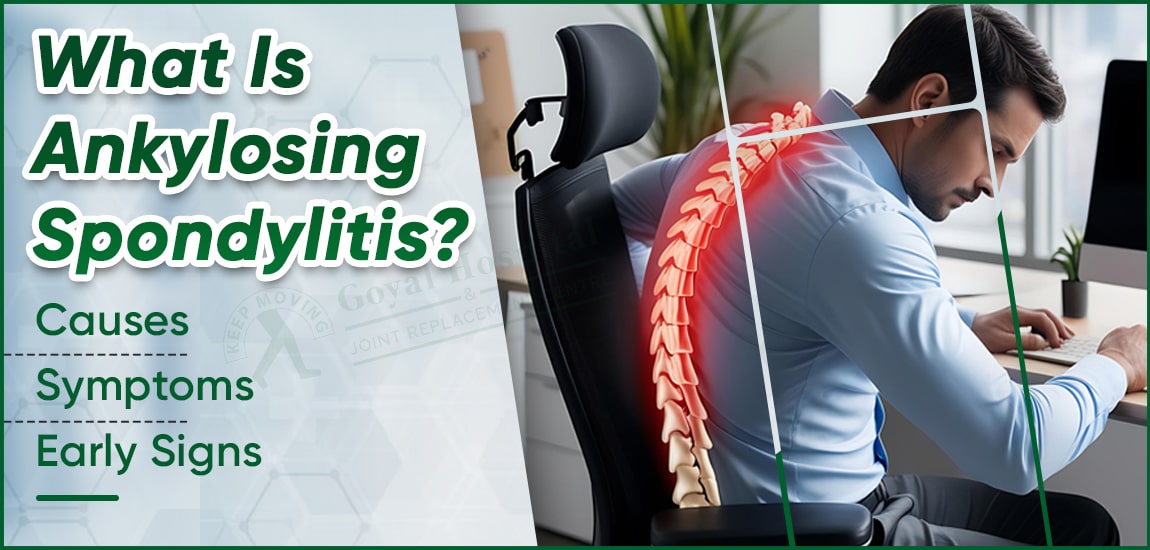
Ankylosing Spondylitis (AS) is a chronic progressive inflammatory condition primarily involving the spine and sacroiliac joints, which results in a gradual development of and eventually fuses the vertebrae. As a result, the flexibility of the spine is reduced, and the posture becomes stooped.
This disease mainly affects young individuals, particularly males, and is classified as a rheumatologic condition, meaning it is under the care of a specialist dealing with ailments of such nature. Knowing about Ankylosing Spondylitis, the factors that lead to its onset, the signs and symptoms, and the first manifestations can greatly help in obtaining a swift diagnosis and treatment that would stave off complications.
What Is Ankylosing Spondylitis?

Ankylosing Spondylitis is classified as an arthritis type characterized by inflammation in the spinal column and major joints. It falls under axial spondyloarthritis, meaning it mainly affects the central skeleton, with the lower back being the most common area. The starting point for this inflammation is the sacroiliac joints, which are located at the intersection of the spine and pelvis, and from there it moves up gradually.
Sometimes, this condition causes the body to build up new bones in an attempt to heal the inflammation, which causes the fusing of the bones involved. Thus, the spine may become immobile, and in extreme cases, patients can acquire the condition of being permanently hunched over. Besides problems with the spine, Ankylosing Spondylitis can also cause complications in the eyes, heart, lung, and other joints like the hips and shoulders.
What Causes Ankylosing Spondylitis?
The exact mechanism of Ankylosing Spondylitis is still a mystery, but several factors are believed to be responsible for its occurrence.
- Genetic Factors: HLA-B27, a specific gene, is present in nearly all the Ankylosing Spondylitis patients. Even though it is not a certainty that every person with this gene will ultimately develop the disease, it does significantly increase the risk.
- Immune System Response: AS is considered an autoimmune disease, in which the immune system of the body wrongly destroys its own tissues causing inflammation in the spine and joints.
- Family History: The likelihood of developing the disease grows with the number of close relatives who have it; in particular, if a parent or a sibling has Ankylosing Spondylitis, one is said to be genetically predisposed to the disease.
- Environmental Factors: Very seldom, certain types of infections with certain bacteria or some environmental factors may trigger the disease in those who are genetically susceptible.
- Gender and Age: This condition is mostly seen in males and usually manifests during late adolescence or early adulthood, that is around 20 to 40 years of age.
You can Read Also:- Leg Pain: Causes, Symptoms, And Treatment
Symptoms of Ankylosing Spondylitis
Ankylosing Spondylitis’ symptoms might show diverseness among individuals; however, the most frequently observed are the ones regarding inflammation, stiffness, and pain in the affected areas, particularly the spine and the joints.
- Chronic Back Pain: Another main symptom of AS is chronic pain in the lower back or sometimes in the extremities, characteristically having similar to and vice versa relations with movement so that it gets less bothersome during activity but more during lying down.
- Morning Stiffness: A great many AS sufferers find their back feels stiff at first after getting up but then gradually becomes easier during the day.
- Limited Flexibility: In an advanced scenario, the spinal joints could unite, thus restricting the range of motion and giving the affected area a neck or back that feels stiff.
- Hip and Shoulder Pain: The inflammation associated with AS could affect the hip, shoulder, and even rib areas, thereby causing difficulty in breathing and performing daily activities.
- Fatigue: Persistent inflammation is one of the major causes of general tiredness and fatigue despite getting enough sleep.
- Eye Inflammation (Uveitis): A considerable number of patients suffer from one or both eyes showing symptoms of redness, pain, and blurry vision that demand prompt medical attention.
- Weight Loss and Fever: Slight fever and inadvertent loss of weight might be some of the consequences experienced during the flare-ups.
Early Signs of Ankylosing Spondylitis
Detecting the initial symptoms of Ankylosing Spondylitis is very important for a quick diagnosis and for avoiding critical complications. The disease is caught in time allowing to control it better and thus the quality of life gets better.
- Gradual Onset of Back Pain: The symptom that grows gradually during weeks or months is not a sudden one after an injury, it is really a strong sign.
- Pain That Improves With Exercise: The AS-related discomfort, unlike common back pain, gets better with physical activity but the other way around with rest.
- Night Pain: The pain usually makes patients wake up during the latter part of the night and then it gets less when they get up and move about.
- Alternating Buttock Pain: Pain is sometimes felt on one side and then on the other, something typical of sacroiliac joints inflammmation.
- Reduced Chest Expansion: Inflammation in the rib joints can limit chest movement and thus make it more difficult to take deep breaths.
- Family History: People with a family member who has been diagnosed with AS should know these early signs and if any symptoms occur get a consultation with a rheumatologist.
You can Read Also:- Knock Knees: Causes, Symptoms, and Effective Treatments
Diagnosis of Ankylosing Spondylitis
Diagnosis typically consists of taking a medical history, doing a physical examination, conducting imaging studies, and running laboratory tests.
- Medical History and Physical Exam: The doctor will inquire about pain, stiffness, and family history, and perform a spine flexibility test.
- Blood Tests: HLA-B27 gene test and inflammatory markers’ tests like C-reactive protein (CRP) or Erythrocyte Sedimentation Rate (ESR) may aid in the diagnosis confirmation.
- Imaging Tests: X-rays and MRI can show inflammation, joint destruction, or spinal fusion. MRI can identify early changes that are not yet visible on X-rays.
Treatment for Ankylosing Spondylitis
At present, an uncontested recovery from ankylosing spondylitis does not exist. Patients are operated upon with pain management, inflammation control, and spinal mobility enhancement.
● Drugs:
- NSAIDs: These drugs are primarily for pain and stiffness relief.
- Biologic drugs (TNF or IL-17 inhibitors): These medicines slow down the inflammation in a unique way, resulting in less likelihood of disease betterment.
- Corticosteroids: These medicines are given for a limited period to manage swelling.
● Physical Therapy: Movement and posture training done on a regular basis are the two ways through which spinal mobility is enhanced and the risk of developing deformity is reduced.
● Lifestyle Changes: Control of weight, smoking cessation, and good posture are among the ways to cope with ankylosing spondylitis symptoms.
● Surgical Procedures: Joint replacement surgery is one of the procedures that can be performed when a patient has moderate to severe joint destruction, or spinal deformity.
Prevention & Self-Care Tips
Although the complete prevention of Ankylosing Spondylitis is impossible, the proper lifestyle management may mitigate the attacks and enhance performance.
- Regular Exercise: Sports such as swimming and stretching contribute to the flexibility of the joints.
- Proper Posture: An upright posture helps in preventing spine fusion in a curved position.
- Stop Smoking: Smoking has the potential to aggravate spinal inflammation and lower lung capacity.
- Balanced Diet: A diet containing calcium, vitamin D, and anti-inflammatory foods in good amounts is beneficial to the health of bones and joints.
Conclusion
Ankylosing Spondylitis is one of the chronic diseases for which treatment is very important to take the right steps to maintain the patient’s mobility and to lessen the pain. The early recognition of symptoms like constant back pain, morning stiffness, or inflammation of the eye can result in better treatment. Due to new developments in rheumatology, the treatment of Ankylosing Spondylitis has been more successful with medication, physical therapy, and lifestyle changes used in parallel.
For special care and full treatment, the Rheumatology Department at Goyal Hospital provides diagnosis by experts and personalized treatment plans for patients with Ankylosing Spondylitis. In case you have the early signs of the disease or you have an already existing joint pain, visiting a specialist at Goyal Hospital can be a starting point for you to regain control over your spine health and to live an active, pain-free life.
FAQs
1. Can Ankylosing Spondylitis be completely cured?
No, it can’t be completely cured, but if diagnosed and treated早, the symptoms can be managed very well, thus preventing spinal stiffness and complications.
2. When does Ankylosing Spondylitis typically begin?
It generally starts in the late 20s to early 40s, with most individuals presenting symptoms between the ages of 20 and 30.
3. Which specialist should I consult for Ankylosing Spondylitis?
A rheumatologist is the specialist to go for both diagnosis and treatment of Ankylosing Spondylitis.